
Is your pet limping and avoiding playtime? These may be early signs of bone or joint issues needing immediate attention. To avoid serious health repercussions, finding an expert pet orthopedic clinic in Nad Al Sheba is important.
At Happy Tails, the trusted vet clinic in Nad Al Sheba caring for local pets since 2024, we provide compassionate, expert-led surgical care to help your furry companion move pain-free again. With a team of skilled orthopedic vets in Nad Al Sheba and a tailored recovery plan, we ensure your pet returns to their mischiefs as soon as possible.
It is possible that orthopedic issues can increase in your pet with age, especially in larger breeds or highly active dogs.
As joints wear down or pet bones weaken, your dog or cat may show stiffness, discomfort, or even mobility loss.
These age-related changes are common but manageable with early intervention.
Aside from aging and activity, other causes include genetic conditions, traumatic injuries (like falls or car accidents), obesity, and joint infections. Puppies and kittens can also suffer from developmental bone deformities that require correction.
Our expert pet Orthopedic Services ensure that no matter the cause, your pet receives the care it needs.
If orthopedic issues worsen, treatment can become critical and complicated. This is why you must identify such serious problems at the beginning. Here are some of the most common indicators for orthopedic surgery:
Noticeable avoidance of weight-bearing on one limb could mean orthopedic discomfort.
Pets with joint problems can struggle to stand or move after lying down.
If your playful pet starts to avoid running, jumping, or climbing stairs, that could mean something is wrong.
Swelling, heat, or pain touching the affected area could require orthopedic surgery.
If you can hear unusual joint noises during movement, you must get an orthopedic diagnosis.
Irritability or withdrawal due to chronic pain can be a sign of joint pain and indicate the need for surgery.
Advanced ACL/CCL ligament repair surgery.
Stabilization and healing of broken pet bones.
Surgical options for malformed or degenerative hip joints.
Fixes dislocated kneecaps in small and medium breeds.
Minimally invasive joint examination and treatment.
Corrective surgery for slipped discs or spine trauma.
Targeted intervention for forelimb lameness.
Realignment of abnormal limb or joint development.
Prosthetic joint replacement for hips or knees.
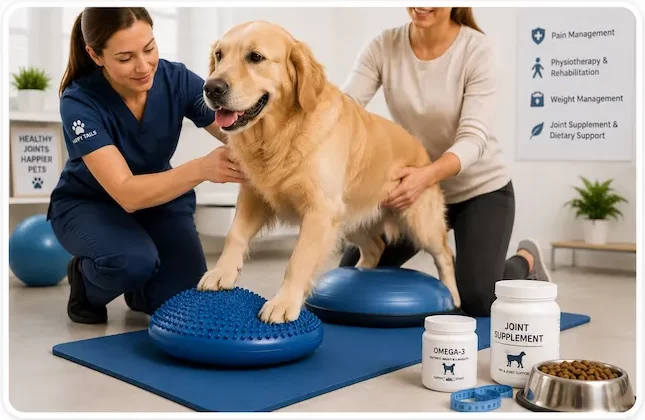
At Happy Tails, surgery is never the default. We always assess whether your pet’s condition can be managed without going to the theatre first.
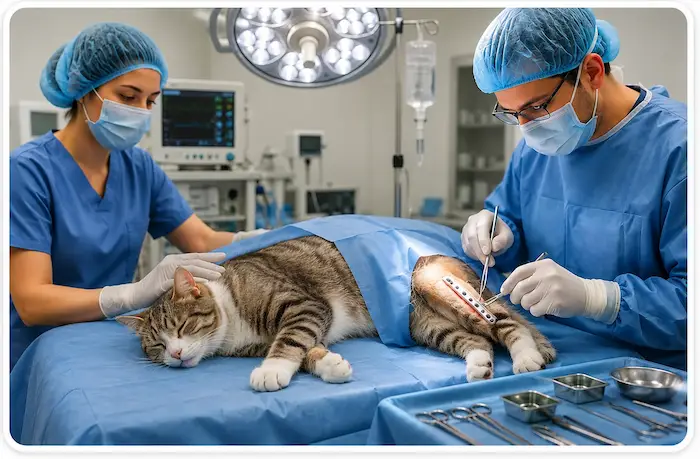
When surgery is the right call, our pet surgery in Dubai team handles every procedure with specialist-grade care and a structured recovery plan from day one.
Choosing a competent pet orthopedic clinic in Nad Al Sheba is crucial as it can improve or worsen your pet’s health. Here is why you can be stress-free and choose Happy Tails:

We have the most experienced orthopedic vets in Nad Al Sheba with years of surgical expertise.

Our clinics are fully equipped with operating rooms and advanced tools for effective procedures.

Our experienced staff ensures every patient receives personalized attention and care.

We offer clear communication at every step, with no hidden costs.

We offer physical therapy, check-ups, and lifestyle guidance as part of our post-surgery rehabilitation efforts.

We also provide convenient mobile vet in Dubai services, allowing your pet to receive expert consultations, follow-ups, and post-surgery care in the comfort of your home.

German Shepherds and Labradors are highly prone to dog dislocated hip injuries

Great Danes and Rottweilers often need a dog hip replacement evaluation by middle age
French Bulldogs and Dachshunds suffer from spinal disc disease and kneecap dislocation

Border Collies and Huskies are prone to ligament tears from high-impact activity in Dubai's heat

Apartment falls and door accidents can cause limp cat tail and nerve damage, requiring care.
Orthopedic surgery can significantly improve your pet’s quality of life. By correcting painful conditions like torn ligaments or joint deformities, your pet can regain full function and joy in daily activities.
Surgeries not only relieve chronic pain but also prevent further joint damage and long-term disability.
Post-surgery, pets often show improved mood, appetite, and social behavior. With our advanced diagnostics and recovery protocols, Happy Tails ensures a safe and smooth healing journey for your furry family member.
We use a streamlined and effective surgery process to maximize successful results. Here is what you can expect:
Don’t let mobility issues steal your pet’s joy. Schedule a consultation with Happy Tails and let our trusted experts restore your pet’s comfort and confidence. Whether you’re searching for an orthopedic vet near me or need urgent pet orthopedic services, we’re here to help every step of the way.
Book your orthopedic evaluation today and show your pet that you care.
Don’t just take our word for it. Here’s what our clients in Nad Al Sheba and Al Meydan have to say:
Large dog breeds like German Shepherds, Labradors, and Rottweilers are more likely to develop hip or elbow dysplasia, while smaller breeds may face kneecap dislocation.
There is no specific age limit for orthopedic surgery. Instead, the decision whether a pet can or cannot get surgery depends on the type of surgery and its individual health assessment.
Some mild conditions can be managed with physical therapy, weight management, or medication, but severe cases usually require surgical intervention.
Recovery varies by procedure, but most pets begin to show improvement within 2–4 weeks and may take up to 12 weeks for full recovery. More complex procedures have longer recovery periods.
Yes, anesthesia can be safe for senior pets, but it depends on their overall health and proper precautions.
Yes, post-operative rehabilitation is often essential for regaining strength and mobility, and we offer those services on-site.