




The tiniest patient I saw one morning was a six-week-old kitten who fit in the palm of one hand, brought in by a first-time owner who had no idea her new arrival already needed protecting. “He’s so small,” she kept saying, and that’s exactly the point people miss: your kitten should receive its first vaccine at around 6 to 8 weeks of age, and if you’ve just brought one home, that window may already be here. Every kitten needs protecting early, and cat vaccination in Dubai follows the same internationally recommended schedule used by vets worldwide, but a few local factors, like the heat, the environment, and the disease risks specific to this region, make sticking to it especially important. Most kittens need three rounds of core vaccines in their first four months, then an annual booster after that.
So yes, it starts earlier than most new owners expect. Having guided Dubai’s new kitten parents through exactly this at Happy Tails from 2024, I’ve learned the earlier you understand the schedule, the smoother that whole first year becomes.
What Happens If You Wait Too Long?
Here’s the thing, kittens lose the natural immunity passed on through their mother’s milk somewhere between 6 and 12 weeks of age. That window is called the “immunity gap,” and during that period, your kitten is genuinely vulnerable to serious infections. Feline panleukopenia, herpesvirus, and calicivirus can all hit hard in a young, unprotected cat. These aren’t rare diseases in Dubai; they circulate in the environment, and even indoor kittens can be exposed through shoes, clothing, and human hands.
We’ve had owners bring a kitten into Happy Tails that was “perfectly fine” at 10 weeks, only to return with a serious infection by 14 weeks because vaccinations had been put off. Real risk. Completely preventable.
Most vets will tell you: don’t wait until your kitten “seems sick.” By then, you’re often already managing a problem that a simple jab could have stopped before it started.
Kitten Vaccination Dubai: Your Complete First-Year Schedule
The schedule below follows WSAVA (World Small Animal Veterinary Association) guidelines the international standard that Happy Tails and most reputable clinics across Dubai use as their baseline.
6–8 Weeks: The Foundation Vaccine
This is when your kitten receives its first FVRCP vaccine, covering feline viral rhinotracheitis (herpesvirus), calicivirus, and panleukopenia. Think of it as laying the groundwork. Your vet will do a physical health check first to confirm your kitten is well enough to be vaccinated before anything else happens.
10–12 Weeks: First Booster
Three to four weeks after the first shot, your kitten comes back for a second FVRCP dose. Depending on your kitten’s lifestyle, some vets also introduce the FeLV (feline leukaemia) vaccine at this stage, particularly if your kitten spends time around other cats or has any access to outdoor spaces.
14–16 Weeks: Third Round and the Rabies Vaccine
The rabies vaccine comes in at this visit. It is a mandatory requirement for pet registration in Dubai under local regulations, so this one isn’t optional, regardless of your kitten’s lifestyle. Your kitten also receives a third FVRCP dose to complete the core series at this appointment.
12 Months: Annual Boosters Begin
One year after the final kitten vaccine, your cat starts its annual booster cycle. This is also when most owners renew their municipality registration. Miss this, and you’re not just risking your cat’s health, you’re risking the fine that comes with an expired registration tag.
Do Indoor Kittens Really Need All of This?
Most first-time kitten owners ask this one. The short answer is yes, even if your kitten never steps a paw outside.
Viruses like panleukopenia and herpesvirus can survive on surfaces for extended periods. You come home from work, you’ve touched a contaminated surface at some point during the day, and your kitten investigates your shoes the moment you walk through the door. That’s genuinely enough for transmission. In our experience at Happy Tails mobile vet Dubai services, it’s one of the most common misconceptions we come across that indoor cats are somehow safe from everything. They’re not.
We’ve put together a full guide on whether indoor cats need vaccinations and when to start if you’re still on the fence. The risk is lower for indoor cats in some respects, but it’s far from zero. And given how affordable and quick the visits are, there’s really no strong case for skipping them.
What to Expect at the Clinic
If this is your first kitten and you’re a little nervous, that’s completely normal. Here’s what a typical first vaccination visit at a Dubai vet clinic looks like.
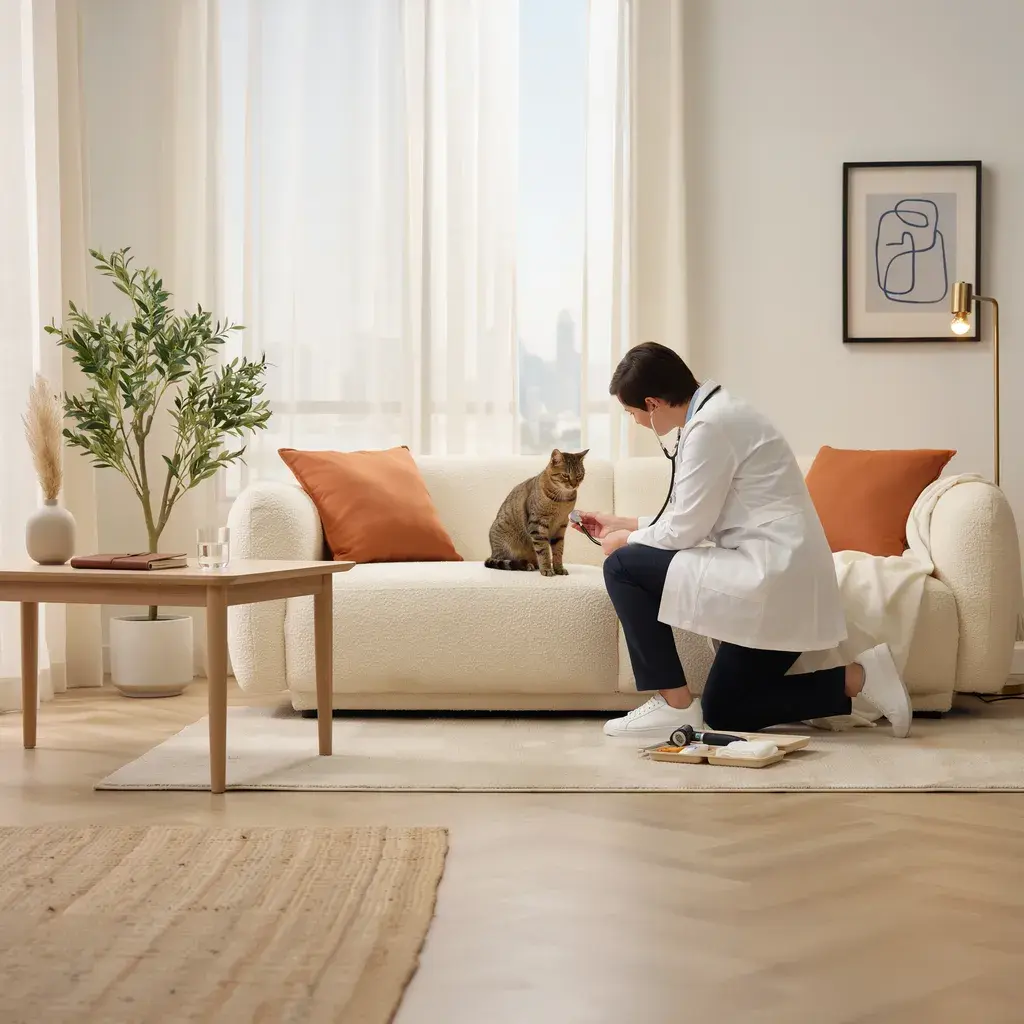
You bring your kitten in a secure carrier. The vet does a physical examination first, checking weight, eyes, ears, gums, and general condition. If everything looks good, the vaccine is given as a small injection, usually at the scruff of the neck. The whole appointment rarely takes more than 20 to 30 minutes.
Some kittens are a little sleepy or slightly off their food that same evening. That’s a normal, mild reaction and nothing to worry about. But if your kitten hasn’t eaten in 24 hours after vaccination, has noticeable swelling at the injection site, or seems to be running a fever, call the clinic.
Understanding pet vaccination in Dubai more broadly, including dogs, annual schedules, and what to do if you’ve missed a round is all covered in our full UAE pet vaccination schedule guide.
Book Your Kitten’s Vaccination Today in Dubai
Getting your kitten’s first-year vaccines right is one of those things that genuinely matters, and starting at the right age makes everything that follows much smoother. The team at the vet clinic in Nad Al Sheba, Dubai, is happy to walk you through the schedule, check your kitten’s records, and make the whole process easy. To get started, you can book your kitten’s vaccination appointment here or just send us a WhatsApp we’ll take it from there.
Frequently Asked Questions
How much does a kitten vaccination cost in Dubai?
Costs vary depending on the clinic and what’s included in the visit. Generally, expect to pay between AED 150 and AED 350 per appointment, depending on whether it covers core vaccines only or includes FeLV and rabies. Many clinics offer bundled kitten packages that work out cheaper across the full first-year schedule. Ask about this before you book.
Can I vaccinate my kitten at home?
No. Vaccines must be administered by a licensed veterinarian in Dubai. Home administration isn’t permitted under UAE law, and vaccines sourced outside of registered clinics won’t be accepted by Dubai Municipality for pet registration purposes.
My kitten came from a breeder do I start the schedule from scratch?
Not necessarily. If the breeder provided vaccination records with dates, batch numbers, and the vet’s stamp, your vet can review them and continue the schedule from where it left off. Always bring those records to your first appointment. Don’t assume the breeder has submitted anything electronically.
Is the rabies vaccine legally required for kittens in Dubai?
Yes. The rabies vaccine is mandatory under Dubai Municipality regulations for pet registration. The other core vaccines (FVRCP) are strongly recommended by international veterinary guidelines and form the foundation of your kitten’s long-term health, but the rabies vaccine specifically is a legal requirement.